 CJ Landscaping
Backyard Patio & Fire-Pit Ideas for Arvada & Broomfield Homes
The best backyard patio and fire-pit setups for Arvada and Broomfield homes are built on interlocking pavers with a gas fire pit at the center, because that combination handles our climate and our fire rules better than anything else. Pavers flex with Colorado's freeze-thaw and frost heave instead of cracking like a slab, and a gas pit keeps working during the seasonal fire bans and high-pollution Action Days when wood burning gets shut down, so you actually get to use it. With our cool, clear evenings and that long Front Range shoulder season, a well-designed fire feature can stretch your outdoor nights from April well into October. Here are the layouts and ideas we build most across Arvada, Broomfield, and the rest of the Denver metro.
Start with the right patio foundation
Before the fire pit, the patio itself has to survive a Colorado winter, and that comes down to what's under it. The Front Range puts surfaces through brutal cycles: freeze-thaw nearly every winter day, frost heave on our expansive clay, and de-icing salt tracked around all season. The fix is a properly built base.
- Interlocking pavers are our go-to. Set on a deep, compacted road-base-and-sand foundation, they flex with ground movement and rarely crack, and a damaged unit pops out and gets replaced invisibly.
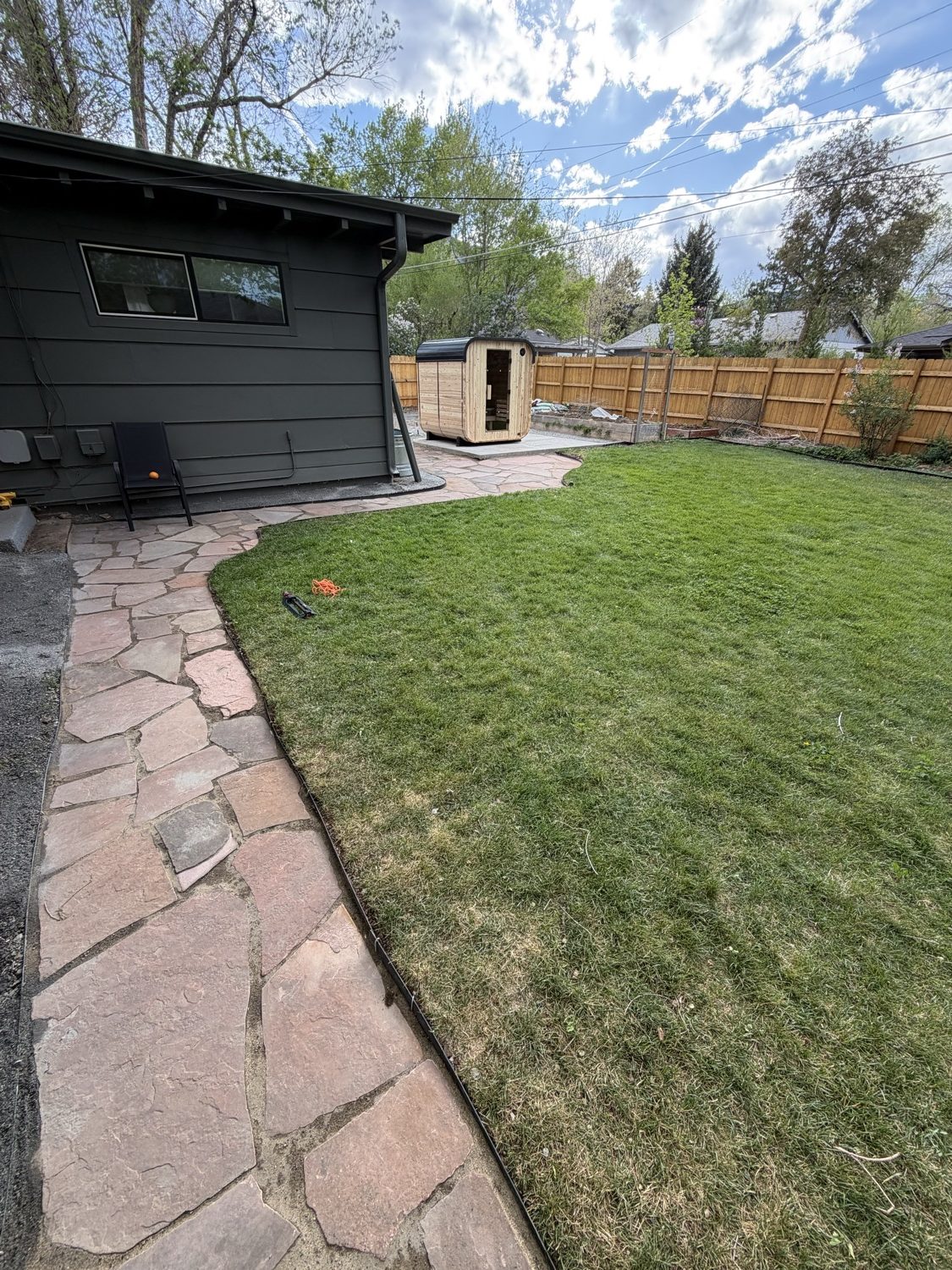
- Natural flagstone on the same kind of base gives a high-end, organic look that suits foothills and Broomfield open-space lots.
- Poured concrete costs less up front but tends to crack and spall over our winters, it's the material we steer most clients away from for a patio they'll keep for decades.
Whatever the surface, the base does the work. On our clay, that means excavating deep, compacting road base in lifts, and grading everything to slope away from the house so snowmelt and storm water never pool against the foundation.
Gas vs. wood-burning fire pits
This is the first real decision, and in our climate it matters more than it does elsewhere because of fire bans. Here's the honest comparison we walk Arvada and Broomfield clients through:
| Factor | Gas fire pit | Wood-burning fire pit |
|---|---|---|
| Convenience | Instant on/off, no cleanup | Gather wood, build, tend, dispose of ash |
| During fire bans | Usually still allowed | Prohibited during bans and Action Days |
| Smoke & sparks | None, neighbor-friendly | Smoke, sparks, ember risk |
| Ambiance | Clean, controlled flame | Crackle and true campfire feel |
| Up-front cost | Higher, needs a gas line | Lower |
| Best for | Frequent use, low hassle | Occasional, campfire lovers |
In a climate with regular summer fire bans, a gas pit isn't just convenient, it's the difference between a feature you use all season and one that sits cold on the nights you most want it.
Patio and fire-pit layouts that work
Layout is where a patio goes from a slab with a fire ring to a true outdoor room. A few configurations we build over and over on the Front Range:
- The conversation circle. A round or octagonal paver patio with the fire pit centered and built-in seat walls or a ring of Adirondacks around it, the classic gathering setup.
- The sunken lounge. Drop the seating area a step or two below grade with a low retaining wall around it, creating a sheltered pocket that blocks our Front Range wind and feels like a destination.
- Zoned outdoor room. Split the patio into a dining zone near the house and a fire-pit lounge farther out, linked by a paver path, ideal for entertaining.
- Fire table on the deck edge. Where a full pit won't fit, a linear gas fire table along a patio edge throws warmth without taking the whole yard.
Wind, warmth, and shoulder-season comfort
Two Front Range realities shape good design. First, wind, seat walls, a slight grade change, or strategic plantings cut the breeze that can make an open patio uncomfortable. Second, our big day-to-night temperature swing, which is exactly why fire features earn their keep here. Pair the pit with a few patio heaters or a pergola and you'll comfortably use the space on cool April and October evenings when neighbors have already packed it in.
Know the Colorado fire rules before you build
This is the part homeowners skip and regret. Front Range fire rules are real and they change with conditions, so design around them from the start:
- Seasonal fire bans. During dry stretches, counties issue open-burning bans that prohibit wood fires, gas features are typically exempt, which is a major reason we lean gas.
- Action Days. On high-pollution days the region asks residents not to burn wood, another check in the gas column.
- Clearances. Keep any pit well away from the house, fences, decks, and overhanging trees, commonly 10 to 15 feet, and never under a cover or low branches.
- Local codes and HOAs. Arvada, Broomfield, and individual HOAs each set their own rules on pit type, gas lines, and setbacks. Always confirm current local code and HOA approval before building.
We handle these checks as part of design, so the finished feature is one you can legally and safely enjoy, not one a code officer or HOA letter shuts down later.
Finishing touches that pull it together
The details are what make a patio feel custom. Built-in seat walls double as extra seating and define the space. Low-voltage landscape lighting along steps and walls keeps the area usable and safe after dark, important with our early winter sunsets. A retaining wall or raised planter ties the hardscape into the yard and tames sloped Arvada and Broomfield lots. And surrounding the patio with water-wise, cold-hardy plantings softens the stone and keeps maintenance and watering low. Done right, a paver patio and fire pit becomes the most-used room in the house for half the year, an outdoor living space built to take everything the Front Range throws at it. That's what we build, start to finish, for homes across Arvada and Broomfield and throughout our service area in Denver, Westminster, Thornton, and Golden.
Patio & fire-pit FAQs
Are backyard fire pits legal in Arvada and Broomfield?
Generally yes. Permanent gas fire pits and features fueled by natural gas or propane are widely allowed and are the easiest to live with, since they're exempt from most open-burning rules. Wood-burning pits are also allowed in many Front Range yards but come with conditions: a contained pit, distance from structures and fences, a way to extinguish it, and no use during a fire ban or a high-pollution Action Day. Rules vary by city and HOA, so always confirm current local codes and check for active burn restrictions before you light a wood fire.
Should I build a gas or wood-burning fire pit in Colorado?
For most Front Range backyards we recommend gas. A natural-gas or propane pit lights instantly, throws no sparks or smoke, leaves no ash, and keeps working during the seasonal fire bans and Action Days when wood burning is prohibited, so you can actually use it on more nights of the year. Wood-burning pits win on ambiance, crackle, and that campfire feel, and they cost less up front, but they're more work and more restricted. The deciding question is usually how often you'll really use it and whether instant, ban-proof convenience matters to you.
What's the best patio material for Colorado's freeze-thaw winters?
Interlocking concrete pavers are our top pick for the Front Range. Because a paver patio is built on a deep, compacted base with sand-filled joints, it flexes with frost heave and our constant freeze-thaw instead of cracking the way a rigid concrete slab tends to. Pavers also tolerate de-icing salt better, and a damaged unit can be swapped out invisibly. Natural flagstone set on the same kind of base is another durable, high-end option.
How much clearance does a fire pit need from a house or fence?
As a rule of thumb, keep a fire pit at least 10 to 15 feet from your house, fence, deck, overhanging trees, and any other combustible structure, and never put one under a covered patio or low branches. Build it on a non-combustible surface like pavers or stone, not directly on a wood deck or dry grass. Local codes set the exact minimums and they vary by city, so confirm the required setbacks in Arvada or Broomfield before you build.
Ready for an outdoor room?
CJ Landscaping designs and builds paver patios and fire features built for the Front Range, code-compliant, winter-tough, and made to use all season. Free quote within 24 hours.
Get your free estimate →