 CJ Landscaping
Smart & Drip Irrigation for Front Range Yards: Save Water, Stay Green
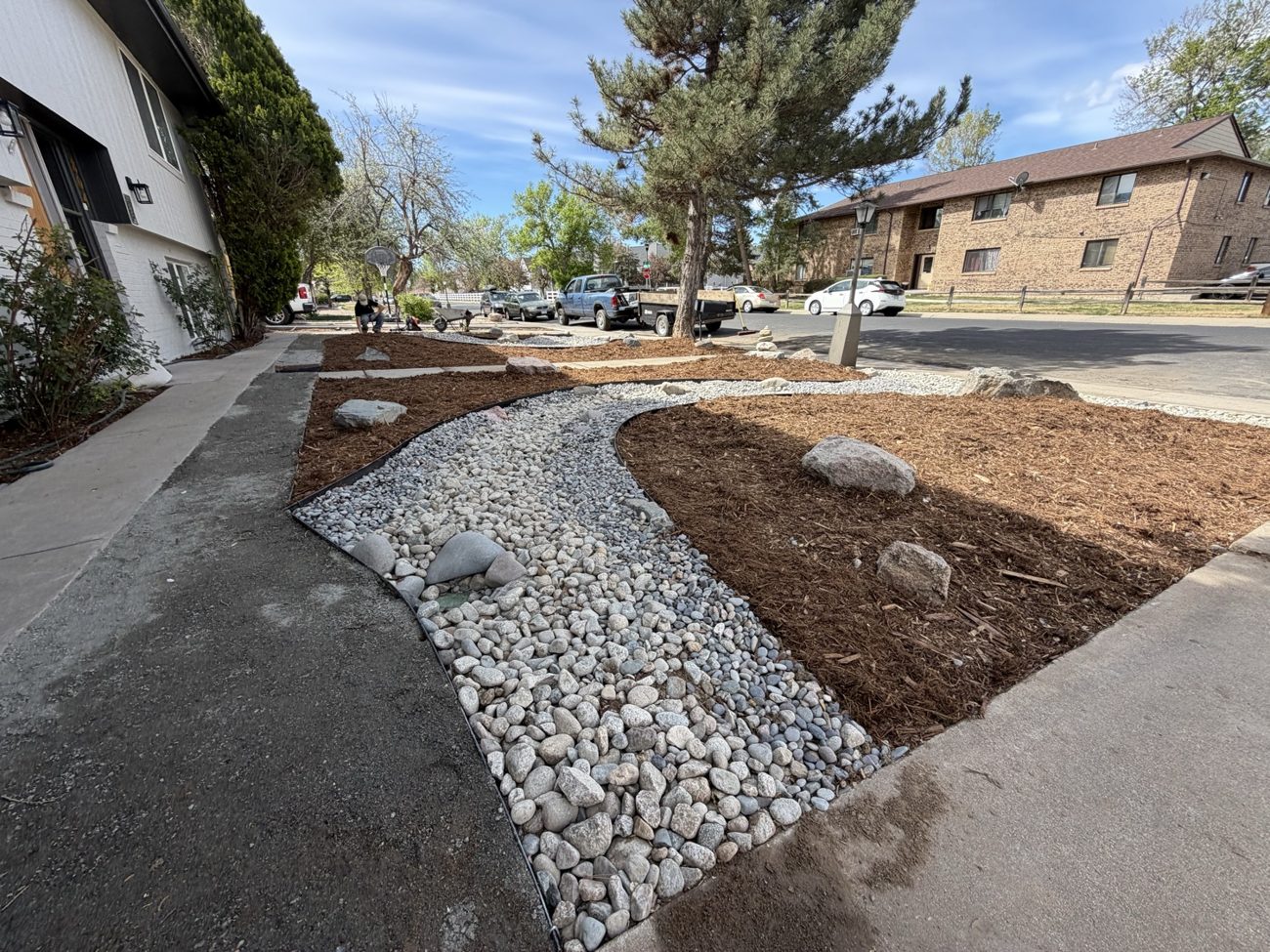
If you want a green yard on the Front Range without a punishing summer water bill, drip irrigation paired with a smart controller is the upgrade that pays for itself. Drip delivers water slowly, right at the root zone, and typically cuts outdoor water use 30 to 50 percent versus spray sprinklers, because it isn't losing half of every cycle to wind and evaporation in our dry, high-altitude air. A smart controller then waters only as much as the weather calls for and skips cycles after rain. Together they keep your landscape healthier while making it easy to live inside Denver Water's summer rules. Here's how we set it up across Denver, Arvada, Westminster, Thornton, Golden, and Broomfield.
Why spray sprinklers waste water in our climate
Denver's climate is tough on conventional irrigation. We're a mile high, semi-arid, sunny, and windy, exactly the conditions that make spray heads inefficient. When a sprinkler throws water into the air, a meaningful share evaporates or drifts before it ever lands, and what does land often hits the surface faster than our heavy clay can absorb it, so it runs off into the gutter. You end up paying for water the plants never drink. On top of that:
- Clay sheds fast water. Dense Front Range clay can't soak up a heavy spray cycle, so the excess runs off, which is also against Denver Water's rules.
- Wet leaves invite disease. Overhead spray soaks foliage, encouraging mildew and fungal problems on shrubs and perennials.
- Uneven coverage. Wind skews spray patterns, leaving dry spots you then overwater to compensate for.
How drip irrigation fixes it
Drip irrigation runs low-pressure tubing through your beds with emitters that release water by the drop, slowly and precisely at each plant's base. Because it meters water out at a rate clay can actually absorb, almost all of it soaks into the root zone instead of evaporating or running off. The wins stack up:
- 30 to 50 percent less water than spray for the same plants, the headline reason to switch.
- Healthier plants. Dry foliage means less disease, and deep, slow watering grows stronger roots.
- Fewer weeds. You water the plants you want, not the bare soil between them where weeds sprout.
- No runoff. Slow delivery soaks in, keeping you compliant and your water in the yard.
- Easy to expand. Add emitters as plants grow or as you extend a bed.
Drip isn't a downgrade from sprinklers, it's a precision tool. You stop watering the air and the sidewalk and start watering the roots, which is the whole game in a semi-arid climate.
Drip vs. spray: where each one belongs
You don't have to pick one for the whole yard. The best Front Range systems are a hybrid, and matching the method to the area is what makes them efficient.
| Factor | Drip irrigation | Spray / rotor sprinklers |
|---|---|---|
| Best for | Beds, shrubs, trees, xeriscape, pots | Lawns and wide turf areas |
| Water efficiency | Very high, little evaporation | Lower, loses water to wind and sun |
| On clay soil | Soaks in slowly, no runoff | Can run off if applied too fast |
| Plant health | Dry leaves, fewer diseases | Wet foliage can invite mildew |
| Coverage | Pinpoint, plant by plant | Even across a broad area |
| Maintenance | Check emitters, flush lines yearly | Adjust and replace heads |
For almost every yard we build, that means rotor or spray zones for the actual lawn and a separate, dedicated drip zone running every planting bed, the most efficient setup for our conditions.
Add a smart controller to do the thinking
Hardware only gets you halfway, scheduling is where most yards waste water, and it's usually from overwatering, not under. A WaterSense-labeled smart controller pulls local weather data and your yard's settings to water only as much as plants actually need, then automatically skips cycles when it rains or after a cool, cloudy stretch. In our swingy climate that adds up fast. Set it up like this:
- Program early-morning cycles. Denver Water bans watering from 10 a.m. to 6 p.m., and pre-dawn runs cut evaporation to almost nothing.
- Water deep and infrequent. Longer, less-frequent cycles push roots down and build drought-tough plants, the opposite of daily sprinkles.
- Zone by need. Group lawn, beds, and xeriscape on separate zones so each gets the right amount instead of one compromise schedule.
- Use cycle-and-soak. On clay, split a long run into shorter bursts with soak time between so water absorbs instead of running off.
Stay inside Denver Water's summer rules
From May 1 to October 1, Denver Water's annual rules apply to most of the metro: water no more than three days a week, never between 10 a.m. and 6 p.m., and don't let water pool or run into the street. Outlying districts in Arvada, Westminster, Thornton, Golden, and Broomfield set their own schedules, but the playbook is identical, and a drip-plus-smart-controller system makes compliance effortless instead of a chore. You're already watering at the right time, at a rate that soaks in, only as much as the weather calls for. A quick bonus worth checking: Denver Water and several Front Range utilities periodically offer rebates on WaterSense smart controllers, so the upgrade can cost less than you'd expect.
Maintenance and winterization
Drip is low-maintenance, not no-maintenance. A couple of habits keep it running clean:
- Flush the lines at startup each spring and check that emitters aren't clogged with our mineral-heavy water, a simple inline filter prevents most of it.
- Walk the system monthly in summer, looking for chewed tubing, dry plants, or emitters that have popped loose as plants grow.
- Blow it out before winter. This is non-negotiable here, water left in lines and the backflow preventer will freeze and crack over a Front Range winter. Have the whole system blown out with compressed air in fall, and don't recharge it until the hard-freeze danger passes in mid-May.
Set up right, drip irrigation and a smart controller turn watering from a guessing game into a system that quietly does its job, greener yard, lower bill, and full compliance with the rules. That's exactly the kind of upgrade we build into every project on the Front Range.
Front Range irrigation FAQs
How much water does drip irrigation save on a Front Range yard?
Drip irrigation typically cuts outdoor water use 30 to 50 percent compared with spray sprinklers, because it delivers water slowly right at the root zone instead of throwing it into the air. In our dry, sunny, high-altitude climate, conventional spray can lose a big share of every cycle to evaporation and wind drift. Drip puts nearly all of it into the soil where plants use it, which lowers your bill and helps you stay inside Denver Water's three-day-a-week limit.
What are Denver Water's summer watering restrictions?
During the summer season (May 1 to October 1), Denver Water's rules allow watering no more than three days per week, prohibit watering between 10 a.m. and 6 p.m., and don't allow letting water pool or run off into the gutter or street. The simplest way to comply is to set your controller to early-morning cycles and water deep but infrequently. A smart controller handles this automatically and skips cycles when it rains.
Is drip irrigation better than sprinklers for Colorado gardens?
For beds, shrubs, trees, and xeriscape, yes. Drip is far more efficient, keeps leaves dry to reduce disease and mildew, and waters slowly enough that it soaks into heavy clay instead of running off. Spray heads still make sense for an actual lawn, where you need even coverage across a wide turf area. Most Front Range yards we build use a hybrid: spray or rotor zones for the lawn and a separate drip zone for all the beds.
Do smart sprinkler controllers really work in Denver?
Yes. A WaterSense-labeled smart controller uses local weather and your yard's settings to water only as much as plants actually need, and it automatically skips cycles after rain. In our climate that usually means a noticeable drop in summer water use with a healthier landscape, since most yards are overwatered, not underwatered. Denver Water periodically offers rebates on qualifying smart controllers, so it's worth checking before you buy.
Want a water-smart system installed?
CJ Landscaping designs and installs drip and smart-controller systems tuned to your plants, your soil, and Front Range water rules. Free quote within 24 hours.
Get your free estimate →